
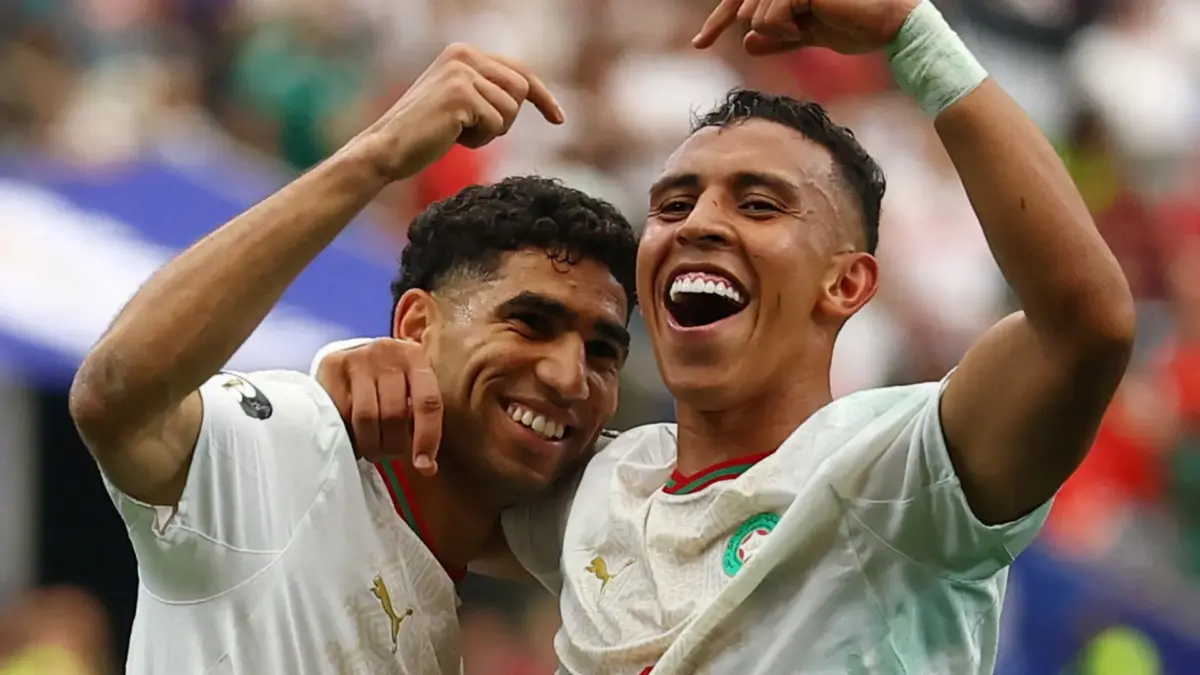
Morocco’s influence in African football is becoming harder to ignore, according to a feature published by Al Jazeera, which says the North African nation has become the continent’s dominant footballing power. The report points to Morocco’s run to the semifinals of the 2022 FIFA World Cup, its hosting of major continental competitions, and its planned joint hosting of the 2030 World Cup.
Al Jazeera reports that Morocco will also host FIFA’s 77th Congress in Rabat on March 18, 2027, and has hosted the last two editions of the Confederation of African Football (CAF) Awards. Three Moroccan players, Achraf Hakimi, Brahim Diaz and Ismael Saibari, are on the 10-player shortlist for the 2026 men’s CAF Player of the Year award, according to the same report.
Investment and strategy
Kamilla Swart, an associate professor at Hamad Bin Khalifa University in Doha, told Al Jazeera that Morocco’s position is the product of a long-term strategy. She pointed to the Mohammed VI Football Academy, inaugurated in 2010, and said the country’s repeated unsuccessful World Cup bids helped it identify weaknesses and build the infrastructure needed for major events.
Swart also said that Morocco’s repeated hosting of CAF events has led some to question whether other African countries are getting enough opportunities, a view she said she could understand while acknowledging mixed feelings across the continent.
Controversy over the 2025 AFCON final
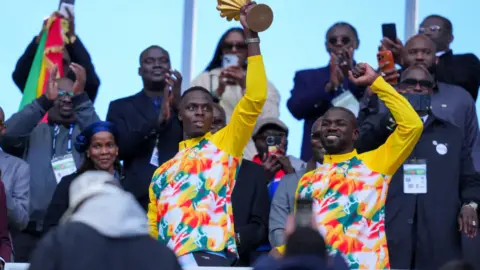
Al Jazeera’s report says concerns about preferential treatment intensified after the 2025 Africa Cup of Nations final between Senegal and Morocco, which Senegal initially won 1-0 after extra time before a late penalty awarded to Morocco prompted Senegal’s players to leave the pitch temporarily. The report states that on March 17, 2026, CAF’s Appeal Board overturned an earlier disciplinary ruling and awarded Morocco a 3-0 victory, and that the Court of Arbitration for Sport later ruled in favour of Senegal’s appeal and reinstated them as champions.
Kenyan sport lawyer and arbitrator Khayran Noor, quoted by Al Jazeera, said Morocco’s institutional progress should be distinguished from CAF’s duty to keep decision-making transparent. Noor called for published evaluation criteria, independent technical assessments, disclosure of conflicts of interest and explanations of final decisions, and warned against financial strength translating into disproportionate influence.
Commercial and CAF perspectives
Gerard Akindes, a sports management scholar, told Al Jazeera that the concentration of major competitions in Morocco partly reflects uneven football infrastructure and broadcasting production elsewhere in Africa. He said AFCON is central to CAF’s revenue. Akindes also suggested Morocco had gained influence by hosting events other countries were unwilling or unable to host.
Adeniyi Adebanjo, a CAF-accredited journalist, rejected suggestions that the rescheduling of the 2026 awards ceremony was linked to the Senegal-Morocco dispute, calling such claims a conspiracy theory in his comments to Al Jazeera. The 2026 ceremony is set for Lagos on December 2, the report says, and the absence of Nigerian players from the men’s shortlist has drawn criticism.
Balancing success and scrutiny
Victor Damilola Ademola, a Nigerian exercise physiologist, attributed Morocco’s success to systematic player development, training facilities and integration of eligible diaspora players. He cautioned against assuming CAF is deliberately favouring Morocco, saying there is no established proof of that, but argued recurring concerns deserve scrutiny. Al Jazeera’s report frames the debate as a question of whether Morocco’s model is an example for others or an imbalance within African football.
Football Maza is reporting these views as presented in the Al Jazeera feature; the claims of preferential treatment remain the opinions of those quoted rather than established findings.